 LinkedIn
 Facebook
 X.com
X.com
 WeChat
 Email
Email
Ocean and Key Ports Update
Earlier this month, Maersk and Hapag-Lloyd announced a change in the routing of one of the shared services under the Gemini Cooperation. From mid-February 2026, a structural change will be implemented to Maersk’s ME11 service, transitioning it through the Red Sea and the Suez Canal. The changes in ME11 routing will be implemented on westbound sailings as of vessel Albert Maersk, voyage 605W, en route from Jebel Ali to India and expected to call the port of Mundra, departing from Mundra on 04 February 2026. On eastbound sailings as of vessel Astrid Maersk, voyage 605E, departing Valencia, Spain on 03 February 2026.
As routing options expand and network conditions continue to evolve, we encourage customers to review their risk mitigation strategies alongside routing decisions. This means reviewing upcoming bookings on this service, contacting insurance providers, and ensuring they have sufficient insurance risk coverage for their cargo going through the area. Maersk can support customers through cargo insurance offerings designed to provide financial protection against loss or damage across ocean and air transport, regardless of routing choice. For more information on our insurance offerings, please click here or speak to your usual representative.
Maersk and Hapag-Lloyd will continue to monitor the security situation in the Middle East region very closely, and any alteration to the Gemini service will remain dependent on the ongoing stability in the Red Sea area and the absence of any escalation in conflicts in the region. For more information on ME11 service change, and other possible changes, please click here.
Severe winter weather has arrived in South-Western and Western Europe, where conditions have caused industry-wide disruptions with vessels sheltering and terminals having to stop operations or working with reduced productivity. In the Bay of Biscay, an area that typically sees unfavourable weather conditions at this time of the year, vessel crossings have started and stopped at intervals, based on the changing weather conditions. Terminals in the Western Mediterranean have also observed stoppages due to severe conditions.
Earlier this month, crossings and terminal operations have resumed for a period of time, however weather conditions have then deteriorated beyond expectations. The ripple effects of the situation continue to be felt across the board. Vessel arrivals and departures continue to be delayed and cause knock-on effects to operations in Western Mediterranean, Norther Europe, and beyond the continent.
Our teams continue to monitor the weather forecasts, work closely with the terminals and vessel operators, and develop contingency plans to help alleviate the situation for our customers. We will continue to provide updates as the situation changes. For the latest information, please visit our advisory page on severe weather across South-West and Western Europe.
Moving east, Maersk has launched a new service between Marina di Carrara, Italy, and Rades, Tunisia, offering best-in-class transit times of just 2 days and 7 hours. The new service strengthens cross-border industrial and automotive production between the two countries, while supporting the nearshoring trend across Europe. Read more about it and hear from Area Managing Directors Emilio de la Cruz and Alessandro Maldina here.
You can receive ETA notifications for your cargo by signing up here.
Inland Update
Severe winter weather conditions are affecting ocean and landside operations across Europe. In addition to the impact mentioned in the Ocean update, conditions like heavy snow, ice, and low temperatures across Northern Europe are disrupting inland transportation networks. Next to the impact on terminals, road conditions are causing traffic congestion and delays for trucks. Rail services are also being affected by frozen track switches, leading to service disruptions and cancellations. At the Port of Gdansk, the restrictions on the landside have led to reduced yard opening times, from the usual 7 days to now 5 days prior vessel ETA.
For safety reasons, customers are kindly asked to ensure snow and ice are removed from containers when delivering them to the terminals. For more information on the latest updates on weather conditions in Northern Europe and the impact on operations, please click here.
Around Europe, we’ve seen changes to truck tolls across different countries. Last year, Danish government has introduced a new road tax for trucks over 12 tons in an effort to reduce the environmental impact of the transport sector. At the start of this year, the Dutch government has announced an introduction of a kilometre-based truck toll that will apply to trucks over 3.5 tons as of 1 July 2026. Similar to what we’ve seen with other road tolls, it will be calculated per kilometre and will vary depending on vehicle weight and CO₂ emission class and is set to make the Dutch road transport more sustainable and efficient.
Although the new toll system and its introduction date are confirmed, the final tariff amounts are still pending official publication. Our teams are currently evaluating the situation and working to ensure that the application of fees is carried out transparently, once these values are defined. For updates on the truck toll in the Netherlands, please click here.
For more information on ways to connect seamlessly with our rail, road, and barge solutions across Europe, please visit our Inland transportation services in Europe.
Air Freight Update
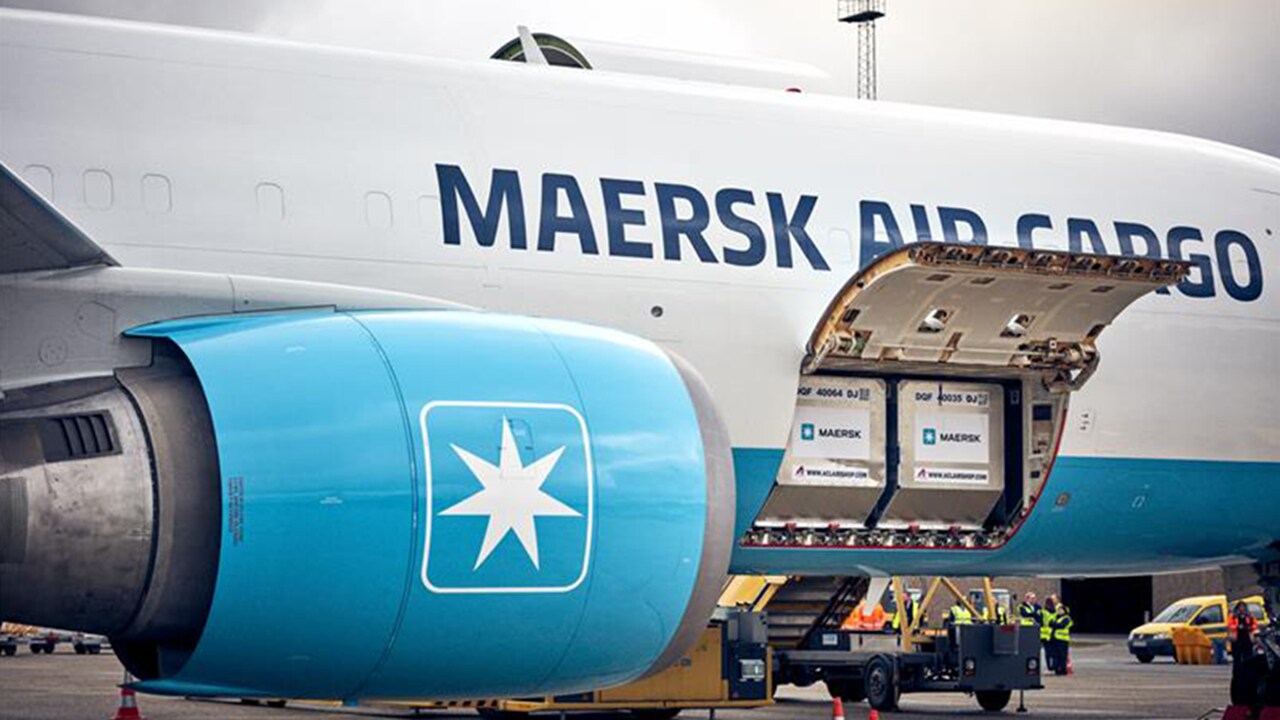
Severe winter weather has also had an impact on air freight in and out of Europe in recent weeks. Snow, ice, and high winds across have resulted in temporary runway closures, slower ground handling, and more frequent last minute flight cancellations at key European hubs – including Frankfurt Airport. These disruptions have extended cut off times, reduced same day uplift reliability and led to more diversions and re routing through secondary hubs.
To maintain service stability through these conditions, we are seeing our charter flight services becoming an increasingly important tool to keep supply chains moving when scheduled networks were disrupted. Maersk and partner carriers have deployed charters frequently to bypass weather affected hubs and protect urgent cargo flows, especially on corridors where factories and distribution centres cannot tolerate extended downtime.
Maersk will continue to monitor conditions closely and deploy charter and contingency capacity as needed to support European air freight flows. Please reach out to your Maersk representative for more information on our charter services and to discuss the benefits for your supply chain.
Elsewhere, Europe accounted for the majority of global air freight expansion with regards to demand, recording 18% year on year growth in November. This resilience has been supported by stable capacity, with global cargo load factors holding close to 47% in December, helped largely by strong passenger schedules that continue to supply consistent belly hold capacity into and out of Europe.
Please click here to find helpful information about Maersk Air Cargo and our services to and from Europe.

Customs Update
Several important customs developments are coming into effect this month, with potential implications for data readiness, border flow, and cost optimisation.
On 9th February 2026, the UK will introduce a new voluntary quality standard (PAS41201) for customs intermediaries. This standard sets expectations around due diligence, staff training, data accuracy, systems governance, crisis procedures, and transparency. We advise customers to review their current brokerage partners and ask whether they intend to meet PAS41201, as those that do are likely to increase scrutiny on product data, supporting documents, and audit trails. Customers should therefore tighten internal documentation, improve data quality, and ensure teams are ready for more detailed requests from compliant brokers.
Staying in the UK, from 25th February 2026, Electronic Travel Authorisation (ETA) requirements will be enforced for travellers from 85 visa free countries, including EU based Heavy Goods Vehicle drivers. Drivers without an ETA will be refused entry, creating potential risks around driver shortages, missed delivery windows, and queuing at busy border points. Customers should ensure all transport providers pre register their drivers, build ETA checks into route planning, and prepare for short term friction at the border if compliance is inconsistent.
Across the EU, ICS2 enforcement is tightening. Importers, carriers, and forwarders are required to continue submitting Entry Summary Declarations even during system outages, with all queued messages uploaded immediately once systems return. Generic product descriptions will be automatically rejected from February. Customers should strengthen master data, enhance product descriptions, update templates used by brokers and carriers, and run internal audits now to avoid Do Not Load orders or cargo holds.
For more information on ICS2 and other key customs and regulations changes coming in 2026 – including EUDR and de-minimis with insights from retail giant Primark – please click here.
Finally, three major EU trade agreements – with Mercosur, India, and Indonesia – are moving toward potential entry into force in 2026. These agreements could significantly reduce duties across automotive, chemicals, textiles, pharma, steel, machinery, and agricultural products. Customers should begin scenario planning, identify products where tariff reductions could create competitive advantage, and explore new sourcing opportunities ahead of ratification.
With the world of customs constantly evolving, Maersk Head of Global Trade of Customs Consulting Lars Karlsson discusses the development of a ‘passport for goods’ to maximise efficiency at the border in our latest video here.
Please don’t hesitate to reach out to our Global Trade and Customs Consultants if you require support with your customs operations.
Useful Links
To sign up for the Maersk Europe customer newsletter, click here and update your preferences when prompted via email.
Check Maersk market updates from across other regions by clicking here.


