 LinkedIn
 Facebook
 X.com
X.com
 WeChat
 Email
Email
From port strikes, extreme weather, cyberattacks and shifting trade policies, retail supply chains are being tested from every direction. In such a volatile landscape, even the smallest disruption can trigger significant ripple effects.
Maersk’s recent research on supply chain resilience, Course for Change, revealed that, on average, retail companies lost 3.6% of annual revenue to supply chain disruption in their most recent fiscal year.
Retailers know that building resilience cannot be a solo project. Strength lies in a unified supply chain, where trusted partners share knowledge and data openly and anticipate and manage risks together.
Yet many still seem to regard these relationships as transactional. Our survey of senior supply chain, logistics and operations leaders in the retail sector highlights this disconnect. While 88% agree that cross-functional expertise, collaboration and partnerships are critical to supply chain resilience, only a third are investing in developing contingency plans in collaboration with their supply chain partners.
The partnership disconnect in supply chain resilience
Historically, retail procurement has focused on cost and convenience. Given the sector’s thin margins, the priority was often finding the supplier with the lowest prices and a siloed approach to procurement (product by product) – even if that involved managing a patchwork of short-term contracts.
In recent years, that model has shifted. In our research, most retail companies agree that building long-term strategic relationships with select suppliers increases reliability even at the cost of reduced margins.
But some are acting more decisively than others – and it’s paying off.
Analysis of retailers in our research that lost less than 1% of revenue to supply chain disruption in the past fiscal year – the ‘resilience frontrunners’ – suggests that paying greater attention to supplier consolidation boosts performance. Over the next 12 month, frontrunners are more likely to prioritise long-term and strategic relationships with select suppliers, even if this has negative implications for their margins. In contrast, the least resilient companies (the ‘followers’) are more inclined to value short-term contracts that maximise value.
The benefit of the frontrunners’ approach is clear. By narrowing their supplier bases, frontrunners gain visibility, streamline coordination, and build mutual accountability. They understand the value of collaboration and the importance of not spreading it too thinly. Followers are twice as likely to experience setbacks in balancing cost-efficiency and resilience in their supplier relationships.
“We’re simplifying in order to build stronger relationships with a smaller number of suppliers,” says Tanja Fend, head of global supply chain strategy and development at Swarovski. “They’re supporting us through a transformation of the business into delivering luxury at scale.”
By sacrificing breadth in favour of depth, frontrunners are fortifying their supplier partnerships to withstand disruption and encourage growth.
Retail sector supply chains: from disconnect to resilience
So how can retailers bridge this disconnect?
1. Sharing responsibility to drive supply chain resilience
A resilient supply chain depends on shared responsibility. Through the focused approach detailed above, frontrunners are creating space for open dialogue, mutual problem-solving and joint investment.
Nearly all (91%) frontrunners are already investing in long-term relationships and trust building. Stronger ties will better withstand crises, support collaboration and growth ambitions. When Singapore-based furniture retailer Castlery wanted to diversify its production base, for instance, it helped fund the global expansion of one of its existing manufacturing partners. “We pushed them to expand their manufacturing presence and capacity, and even loaned them the startup funding and accepted higher unit production cost initially,” says Yao Zhang, Castlery’s vice president of operations. “That paid for the leases on the land, for machines and for materials to get started. Once they ramped up production, we got payback every month after containers shipped, and we continue to work together to gradually improve production efficiency, and therefore cost over time.”
2. Building alignment through shared data
True alignment depends on shared information. When retailers and suppliers work from the same data, they can anticipate disruption, coordinate responses, and make faster, better-informed decisions. Transparency is the foundation of the trust that this requires.
“A highly collaborative environment requires constant data sharing,” explains Deepak Menon, general manager of international supply chain transformation at Anko Sourcing, the supply chain business of Kmart. “The more our partners learn about how we work, the better their position to bring balance to our supply chains.”
This is evident in our research. Nearly all (91%) frontrunners already share real-time data and insights about supply chain events, risks, and performance metrics, compared with just 43% of followers. But, even when data is openly shared between partners, transforming it into actionable insights requires specific capabilities, which not all retailers have in house.
Tools such as Maersk’s Supply Chain Resilience Model can show how collaboration improves reliability, support predictive logistics capabilities, and strengthens their supply chain’s resilience.
3. Turning supplier partnerships into innovation engines
Rather than treating suppliers as vendors, frontrunners treat them as transformative sparring partners. Deep, long-term relationships create space for experimentation, knowledge sharing and co-development.
Tools such as multi-tier supplier mapping and digital twins allow companies to model complex supply-chain systems and anticipate risk before it happens. A significant 19% of retailers say that technologies for multi-tier supplier mapping to enhance transparency are “mission critical” – a figure that’s expected to double within the next five years.
Retailers with consolidated, trusted supplier networks are better placed to carry out these innovations. “We’re aiming to implement digital twin capabilities,” Swarovski’s Tanja Fend explains. “We’re working with our outsourcing partner to build control towers to track our products from the factories to the customers’ shelves.”
4. Logistics Service Providers (LSPs) as reliable partners
Reliability is the cornerstone of resilience. Retailers depend on logistics partners who can deliver on time, mitigate risks and continue to scale, even when global conditions shift.
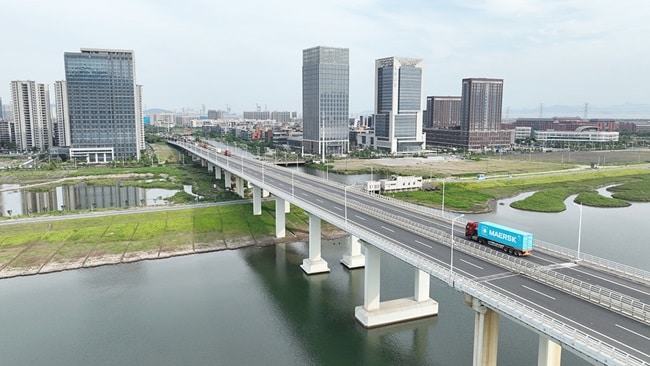
For instance, Maersk’s integrated logistics network offers this dependability especially for goods moving from Asia to the Middle East and Europe with the East-West Network. It provides reliable ocean transport, while the inland transport services link ocean terminals to inland hubs via truck and rail.
Many retail companies are already collaborating with supply chain partners to map and understand the entire supply network. This understanding supports better risk identification and mitigation.
What to do next for supply chain resilience
To foster trusted supplier relationships, companies should focus on four priorities:
- Consolidate and deepen supplier partnerships – move beyond transactional procurement and invest in shared forecasting, capacity planning and data sharing.
- Embed open communication into culture – encourage honest dialogue and shared accountability.
- Engage LSPs strategically – use supply chain partners to co-develop new capabilities and improve visibility across the value chain.
- Measure collaboration impact – track both costs and resilience outcomes, such as speed to market, customer satisfaction and reduced disruption losses.
The goal is to transition from transactional relationships to trusted collaborations. Frontrunners demonstrate that trust, collaboration and reliability matter far more than short-term savings.
Be ready for intelligent supply chain resilience to go all the way! Explore the full Course for Change report and learn more about Maersk Supply Chain Resilience Model, or for more logistics trends and insights, read and download The Logistics Trend Map.

About FT Longitude
At FT Longitude, we harness the power of intelligence with influence to leave a lasting impression on the world of business. With a focus on pioneering thought leadership strategies, we create high-impact campaigns that transform perceptions. We craft powerful insights that engage key decision-makers, and using creative storytelling techniques, we imprint brands with unforgettable messages that resonate. Part of the Financial Times Group, we help brands reach and connect with the world’s most influential people, through the FT’s 21 million monthly global readers. Visit longitude.ft.com and find us on social media.