 LinkedIn
 Facebook
 X.com
X.com
 WeChat
 Email
Email
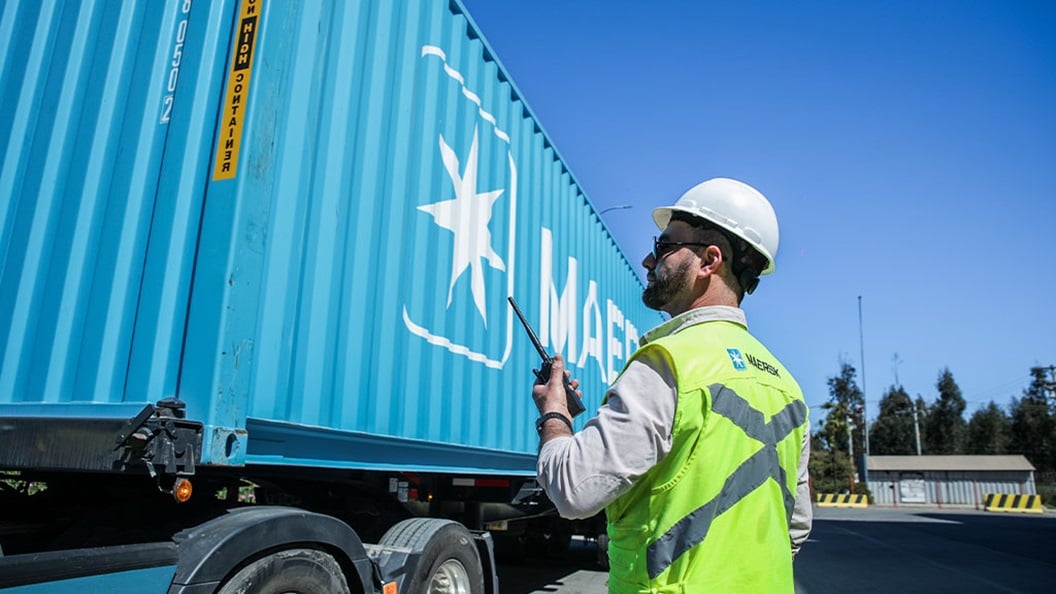
Customs in North America is entering a defining year, one that will reshape how importers plan, operate, and protect their supply chains. As Lars Karlsson, Global Head of Trade and Customs Consulting at Maersk, puts it, “customs is an age-old idea: you draw a line on the ground, and you can’t pass without paying.” That simple construct no longer reflects reality. Customs now touches security, sanctions, ESG, forced labour enforcement, technical standards, and upstream risk management. For your business, this means 2026 will bring continuous, multi-regulation demands across your supply chain.
U.S. Customs and Border Protection (CBP) is accelerating modernization. Janet Labuda, former CBP executive and current Trade and Customs Affairs Manager at Maersk, notes that "business likes transparency, business likes predictability, and both are being stretched to the max right now." Sanctions, ESG rules, tariff actions, forced-labour directives, and origin interpretations are converging. Traditional systems, she says, "were not designed for the complexities we face today."
At the same time, policy uncertainty is rising. The U.S. Supreme Court’s forthcoming ruling on IEEPA tariffs, the administration’s continued use of Sections 301, 232, and 338, and a shift toward component-value-based origin assessments are reshaping cost exposure and documentation requirements. “Normal rules around origin,” Labuda warns, “are being turned upside down.”
Karlsson captures the moment: “Trade and customs compliance have evolved from a necessary burden into a license to play.” The companies that succeed in 2026 will treat customs as an end-to-end capability embedded in sourcing, design, procurement, logistics, and partner selection.
Here is what importers can expect in 2026, and where preparation can help build resilience, transparency, and control.
1. Customs processes are moving earlier in your supply chain
Customs is increasingly happening long before goods reach the border. CBP can now analyse data weeks in advance, and as Karlsson explains, regulators already “look at pre-validated data, earned trust, not given trust, weeks before a shipment arrives.” This shift enables CBP to pre-release goods and conduct risk assessments far upstream, meaning importers must view compliance as starting with product design, classification choices, and supplier onboarding, not just during transit.
Companies are adjusting accordingly. As Amy Morgan, VP of Trade Compliance at Altana, describes, leading organisations use multi-tier value-chain visibility to simulate risks before issuing purchase orders. “They are not just illuminating their value chains and then watching them; they are shaping decisions before any risk occurs,” she notes. This level of transparency is also driving the adoption of “Product Passports”, like Global Entry for goods, enabling importers to pre-share verified supplier data with regulators to reduce detentions and avoid forced labour holds.
2. Tariffs will remain a structural feature of trade
Tariffs will continue to shape landed cost throughout 2026. Even if the Supreme Court clarifies the scope of IEEPA tariffs, broader tariff activity will continue. The U.S. administration is using other authorities, including Sections 301, 232, and 338, to adjust duty rates, target sectors, and respond to geopolitical conditions.
Importers must therefore treat tariffs as part of the landed-cost baseline. Many companies are rethinking their sourcing, exploring eligibility for free trade agreements, or evaluating alternative materials and manufacturing locations. The complexity of rules of origin, especially in sectors such as automotive, electronics, and metals, demands closer coordination among design teams, sourcing, and compliance. A clear view of product components, origin determinations, and manufacturing processes is now essential.
When new tariffs or sanctions are announced, Labuda recommends running quick impact studies to understand which products, suppliers, and lanes are affected and what alternatives exist. Instead of treating each change as a one-off shock, the most resilient teams use scenario planning to test “what if” cases against their supply chain map and adjust sourcing and routing before disruption hits.
The upcoming United States-Mexico-Canada Agreement (USMCA) review adds both uncertainty and opportunity for North American trade. Companies should factor potential adjustments to preferential-treatment rules and border-facilitation processes into their scenario planning.
Labuda also points out that many free trade agreements remain underused, not because products fail the rules of origin, but because the documentation burden is high and companies fear getting it wrong. Better data and AI-enabled validation can change this, helping importers substantiate preference claims with greater confidence and unlock tariff savings to which they are already entitled.
3. Enforcement is expanding across your supply chain
Customs enforcement continues to broaden beyond tariff issues. Forced labour compliance, sanctions, environmental rules, and transshipment are now central elements of CBP’s risk lens. Regulators expect importers to understand how products are made, what inputs are used, and where those inputs originate. Reliance on supplier statements—or one-time questionnaires—no longer meets that expectation.
Illegal transshipment, used to distance goods from restricted origins, is a growing vulnerability. Mark Zeitlin, Maersk’s Head of Customs Innovation, sees the industry increasingly confronting “origin washing,” where goods pass through third countries with minimal transformation to obscure their true source.
Labuda adds that manual validation quickly becomes outdated. "That information becomes obsolete almost immediately," she warns. You need systems capable of tracing and verifying data in real time. Transparency across multiple tiers is now the baseline that regulators expect during reviews.
She also cautions that resilience is not only about keeping goods moving but keeping them moving legally. Regulators monitor document fraud, double-invoicing, corporate identity theft, and illegal transshipment. Shortcuts tend to surface over time, often leading to penalties, detentions, and operational disruption.
4. Data ownership is now a core competency
Data is becoming one of the most important differentiators in customs performance. As Karlsson emphasizes, “you need to own your data…it is literally a currency.” Importers must manage customs and supply-chain data as a continuous information chain, spanning product catalogues, bills of materials, supplier networks, origin evidence, and historical compliance decisions.
Centralized, validated data allows companies to identify risks earlier, model tariff scenarios, optimise routing, and respond quickly to agency inquiries. Fragmented data—spread across suppliers, brokers, and partners, reduces both speed and accuracy. As CBP modernises, the quality of an importer’s data becomes a competitive advantage.
Maersk's Trade and Tariff Studio centralizes this critical data. It connects product classification, origin determination, supplier documentation, and tariff exposure into a single platform, giving you the transparency and control needed to respond quickly to regulatory changes and optimize your landed costs.
Labuda notes that this same data can also improve business performance. When AI and machine learning analyse cost drivers, supplier performance, lead-time variability, and compliance, data becomes a strategic asset. It informs where to position inventory, which suppliers to prioritize, and how to maintain service levels in volatile conditions.
5. Compliance is a strategic, cross-functional capability
Compliance is shifting from a transactional back-office activity to a strategic function integrated across sourcing, procurement, logistics, finance, and legal. One notable shift over the past year, highlighted by industry leaders, is the breaking down of internal silos. Sourcing teams, compliance teams, logistics teams, and even C-suite leaders increasingly operate through joint task forces or working groups, recognizing that tariff changes, de minimis rules, origin requirements, and forced-labour enforcement touch every part of the business.
Compliance cannot protect your organization if you bring it in after decisions are made. Choices about materials, suppliers, transport modes, routing, and inventory placement each carry customs implications. Involving compliance early reduces downstream corrections, delays, and penalties.
Looking ahead: a strategic imperative
2026 will not bring a simpler customs environment, but it will reward companies that prepare for complexity rather than react to it. Those that strengthen data quality, gain visibility across multiple supplier tiers, validate their origin determinations, and connect compliance with sourcing and logistics will operate with greater predictability and fewer surprises.
Customs is no longer a downstream task. It is a strategic capability that determines how quickly goods move, how much they cost, and how protected a company is from disruption. With the right visibility, governance, and partnerships, companies can navigate the regulatory shifts ahead with confidence and build supply chains that are resilient, transparent, and ready for what comes next.
Be ready for 2026 customs shifts to go all the way! Discover more with Maersk Logistics Insights and explore how Maersk's Trade and Tariff Studio can help you model tariff scenarios and validate compliance in real time, and learn more about how evolving tariffs and compliance demands may impact your supply chain.