LinkedIn
 Facebook
 X.com
X.com
 WeChat
 Email
Email
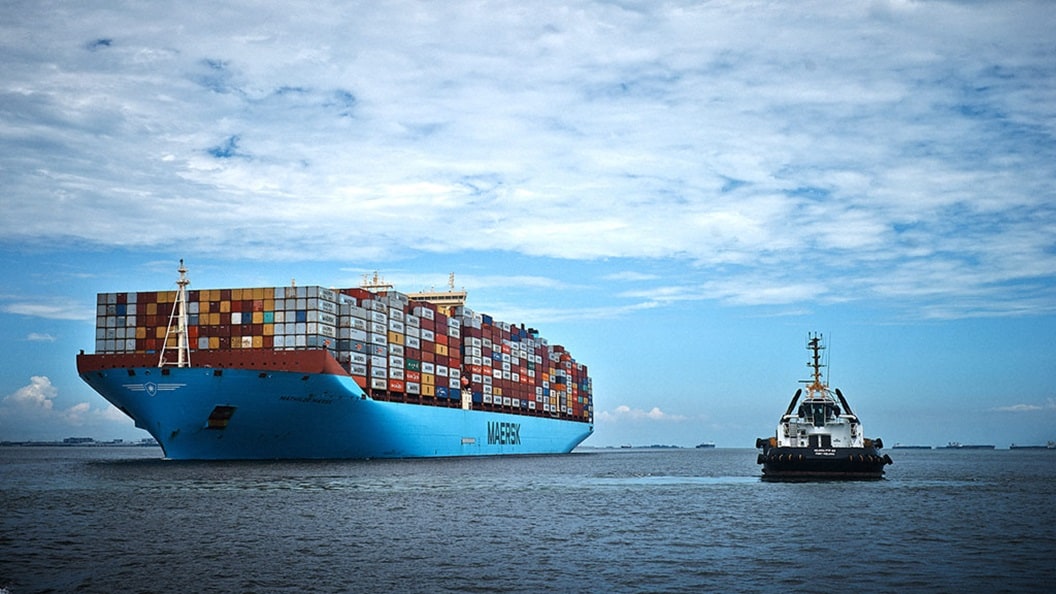
As we welcome a new year, are we also set to welcome new dynamics for global trade? The winter 2026 edition of the Maersk Global Market Update takes a deeper dive into what’s on the horizon and explores some of the key events that could influence global supply chains in the year ahead.
Trans-Suez return
The talk of the logistics industry in recent months has been firmly around the possibility of a return to the Red Sea and once again utilising the Suez Canal as a gateway between Asia and Europe. For Maersk, the MECL service successfully transiting the area on 19th December 2025 was a significant step forward, however a return to the Red Sea remains at the planning stage and depends on continued safe and sustainable conditions.
The transition back to trans-Suez shipping will indeed be a significant one for the entire industry and complete immunity to disruption is unlikely, however the experience and insights gained from previous events will enable us to mitigate some of the disruption and safeguard our customers’ supply chains.
There is no doubt that there will be added volatility to supply chains once container liners begin the shift back to East-West transits through the Red Sea, just as we saw when the industry started sailing via the Cape of Good Hope. While this shift can be planned to a certain extent, changes of this size introduce considerable disruption to the networks, and the scale of the impact will depend on how fast the transition will happen.
A useful lens for understanding the potential impact of a return to the Red Sea is to look back at the impact of the Covid-19 pandemic on global supply chains. While the disruption may not be as widespread as it was during the pandemic, the similar patterns and trends emerging give strong indication of how to build stability as quickly as possible.
In early 2020, finished goods inventories in the Euro Area were balanced well with demand, but lockdowns and quarantines caused them to steadily decline until late 2021. When operational constraints were lifted, we saw inventory whiplash and infrastructure strain, with significant congestion across several ports. How this ties into the resumption of Red Sea transit is the fact that the first vessels sailing via the Suez Canal and the final vessels sailing via the Cape of Good Hope could feasibly arrive at the same time, potentially giving importers multiple months of inventory in one hit and subsequently driving Europe’s inventory-to-sales ratio upwards.
Euro Area inventories are already slightly above those early 2020 levels mentioned previously and actually higher than average relative to demand, so the acceleration of vessel arrivals into Europe means overstocking is a distinct possibility. Maersk is modelling scenarios to better understand clashes in both Europe and Asia, as well as collaborating with customers to determine the right strategy for eliminating overstocking. As with Covid, importers should prepare for short-term volatility in cargo flows and inventory levels, and they will likely need to consider adjusting ordering patterns in advance to rebalance stock.
Potential congestion in Europe
Port utilisation data from across Europe further underscores the need to plan ahead. In simple terms, port utilisation measures how much of a terminal’s designed capacity is being used.
Drewry’s most recent figures show that key terminals like Rotterdam, Hamburg, and Algeciras were operating around 80% efficiency during the summer of 2025, and high activity levels have remained in the months since. At this level, there is typically enough buffer to handle fluctuations in arrivals, but once utilisation moves close to the 90s, that buffer shrinks significantly and presents vulnerabilities. As a reference point, when utilisation reached the mid-80s across global terminals at the end of the pandemic in Q1 2023, many were operating close to their limits. European ports today are not yet at critical levels, but they are close enough that a simultaneous influx of vessels from both the Red Sea and Cape of Good Hope routes could push them into that high-risk zone. Congested ports should be considered as part of a business’ scenario planning – allowing for longer lead times, securing alternative transport routes, and coordinating closely with carriers to adjust delivery windows.
Tying up capital in high inventories has historically proven challenging for businesses during supply chain shifts. Considering that flexibility is currently constrained from high utilisation in European terminals and coupled with the generally high levels of inventories in Europe, a sharp focus on avoiding unintended build-up of inventory will be a priority for many customers ahead of a full trans-Suez return. We will work closely with them to support these efforts.
Thorough preparation is one way Maersk is looking to make the transition as smooth as possible, and another is the flexibility built into our Gemini network. The modular set-up of the network means services can be adjusted or reconfigured quickly without disrupting the entire system. That allows us to reroute vessels, adjust schedules, and deploy capacity where it’s needed most during unexpected events.
Further value comes from the use of Maersk-owned vessels and terminals, as it reduces the dependency on third parties. This control over critical infrastructure enables faster decision-making and operational agility when conditions change, such as sudden route reopenings or congestion at specific ports.
Of course, not everything is within Maersk’s control, but Gemini’s proven design with strategically positioned and operated hubs along the Asia-Europe trade route offers key levers to handle the situation which were not available as pandemic restrictions were lifted. As such, this high level of operational control will enable us to more quickly create stability on our customers’ supply chains following the transition.
As mentioned, a return to transiting the Red Sea can have a major impact on operations in Europe and Asia, but our experts want to raise awareness of what could happen on a wider scale. Global networks are more connected than ever – and that’s undoubtedly a positive thing – however changes in one region can create knock-on effects in other markets.
For example, the influx of vessels into Europe could lead to equipment imbalances elsewhere, with containers concentrated in European ports leading to reduced availability in overseas markets. This shift could temporarily constrain export capacity in markets that depend on timely container availability, particularly for agricultural and seasonal goods. We will keep a close eye on developments as they happen, but customers globally should be aware of the potential knock-on effects and plan accordingly.
De minimis exemption in Europe to end in 2026
On European shores, the EU is moving to eliminate the de minimis tax exemption for low-value imports, having previously allowed shipments of up to 150 EUR to arrive without paying customs duties. The bloc was due to remove the exemption in 2028, but low-value parcels arriving in the EU will now be charged 3 EUR per item type from 1st July 2026.
To understand what this truly means for European supply chains in 2026, we turn our attention to trends coming out of the US, where an 800 USD de minimis exemption was removed at the end of August 2025. Unlike the EU’s flat fee approach, low-value shipments into the US are now subject to full duties and taxes based on product classification, making the cost impact more variable and – in many cases – significantly higher for importers.
The goal from both policies is to reward domestic sellers by effectively weakening overseas competition, however Lars Karlsson – Maersk Global Head of Trade and Customs Consulting – who will be following the implementation process closely:
What we observed in the US after the de minimis exemption was removed back in the summer was more e-commerce companies storing inventory in North America to get closer to the end consumer and avoid tariffs. We expect more of the same to happen in Europe in the build-up to the new 3 EUR charge being implemented in July, which will of course cause ripple effects on inventory levels and indeed trade flows. To make this move a reality, the EU relies on complicated customs procedures being implemented in a short space of time across all member states. Some nations are more prepared than others with independent customs declarations on low-value e-commerce already existing. To avoid EU entry point loopholes from further complicating the situation, we need all countries to meet the July deadline.
Maersk will keep a close eye on developments as they happen in 2026. Our Global Trade and Customs Consulting team remain at our customers’ disposal to discuss and implement customs strategies for the year ahead.
More to look out for in 2026
Looking beyond the situation in the Red Sea and the EU’s move to remove the de minimis exemption, there are a number of other policy changes in 2026 that supply chain leaders should have on their radar. Let’s take a closer look at some of the most significant ones.
When it comes to understanding the tariff rate on any given product, the ‘rules of origin’ are essential. Under the current global guidelines, a product needs “substantial transformation” to change the country of origin during manufacturing. In their framework agreement from August 2025, the EU and the US said they will be working on strengthening the rules of origin to “ensure that the benefits of the Agreement on Reciprocal Trade accrue predominantly to the United States and the European Union”.
The same mechanism can be found in US trade agreements with Cambodia and Malaysia and is expected to be a part of pending deals between the US and Thailand, US and Vietnam, and the US and Korea. We will monitor how this develops further in 2026.
Staying with tariffs, the Mexican government has moved to strengthen domestic production with the introduction of tariffs ranging from 10%-50% on over 1,000 products from China, South Korea, India, Vietnam, Thailand, Brazil, Indonesia, Taiwan, Nicaragua, the United Arab Emirates, and South Africa. Affected sectors include textiles, light vehicles, household appliances, motorcycles, cosmetics, furniture, plastics, and auto parts. Read more about it in the Maersk North America Market Update for January 2026.
Elsewhere in the trade agreement space, the current framework between the US, Mexico and Canada is up for review and adjustment in 2026. The three economies combined make up almost a third of global GDP and changes to the agreement could have significant impact on global trade.
More on trends in shipping
For more on what’s happening in the world of ocean shipping, click here to watch Chief Product Officer for Ocean, Johan Sigsgaard, discuss upcoming trends and big talking points.